Cold weather and heavy moisture are tough on parking lots and roadways, especially in Chattanooga, Tennessee, where fall rains quickly turn into freezing nights. If the pavement surface already has a few weak spots, winter weather usually finds them and makes them worse. Deep cracks may spread farther, potholes come back faster, and once water gets below the surface, the damage can sink in fast.
We do not just think about asphalt as a surface layer. The strength of the ground beneath it has a lot to do with how well it holds up through the seasons. That is where soil stabilization and asphalt pulverization work together. By grinding down worn pavement and rebuilding a tougher foundation underneath, the surface stands a much better chance of lasting through winter.
What Happens to Asphalt in a Chattanooga Winter
When daytime temperatures jump above freezing and nights drop back below it, thawing and refreezing put a lot of stress on pavement. Water trapped inside small cracks hardens overnight, forcing those cracks wider every time the temperature drops.
- Repeated freeze-thaw cycles cause pavement to push upward or pull apart
- Water sneaks into the base layers and loosens the foundation
- Soft spots emerge, followed by dips, loose gravel, or full-blown potholes
These patterns tend to show up faster near the end of fall when early cold fronts move through. A few puddles might seem harmless, but if water is finding its way down through the pavement and cannot drain properly, it will freeze and expand. That might not cause immediate collapse, but by mid-winter, the damage can no longer be ignored.
How Asphalt Pulverization Builds Strength from the Ground Up
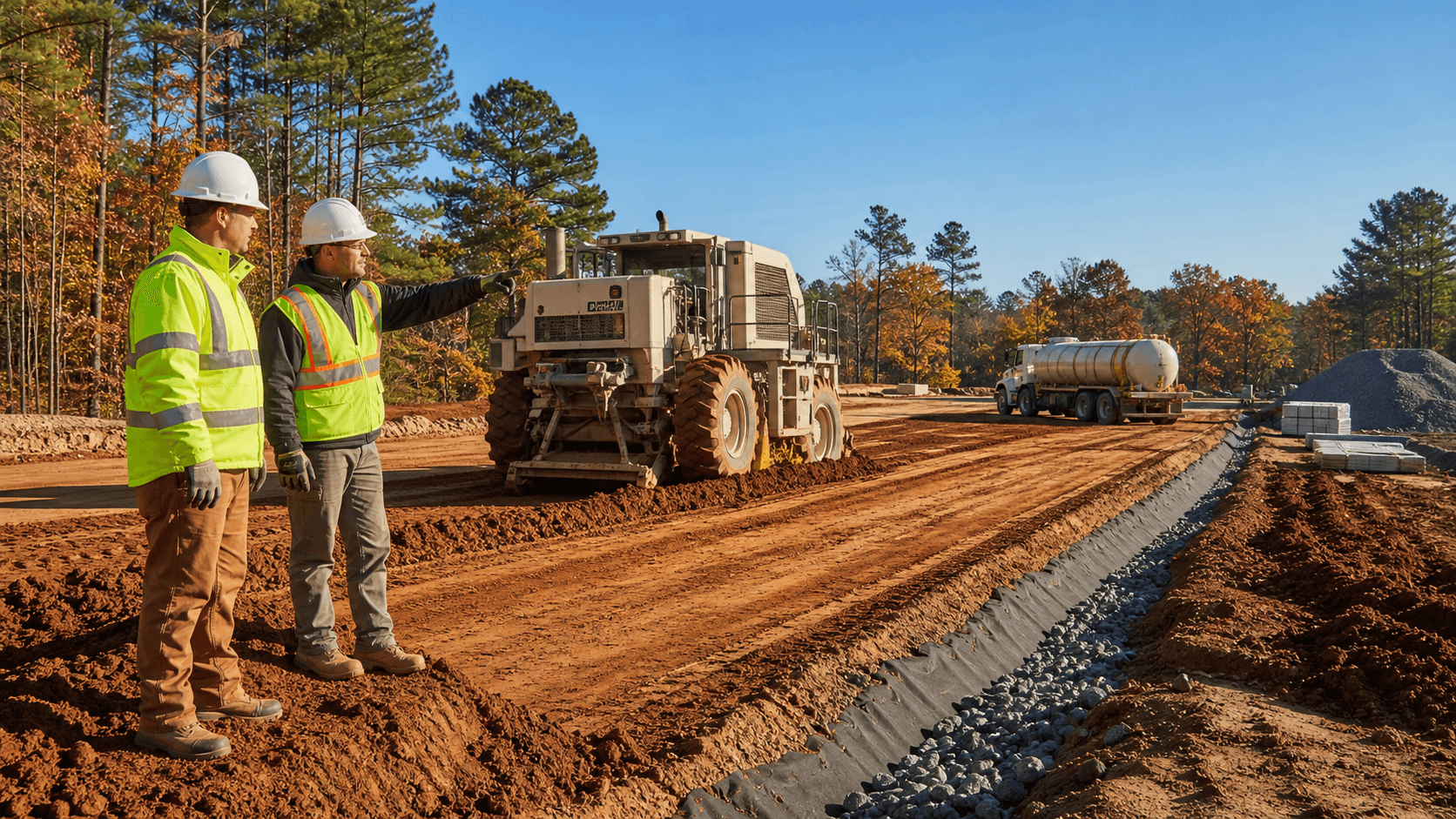
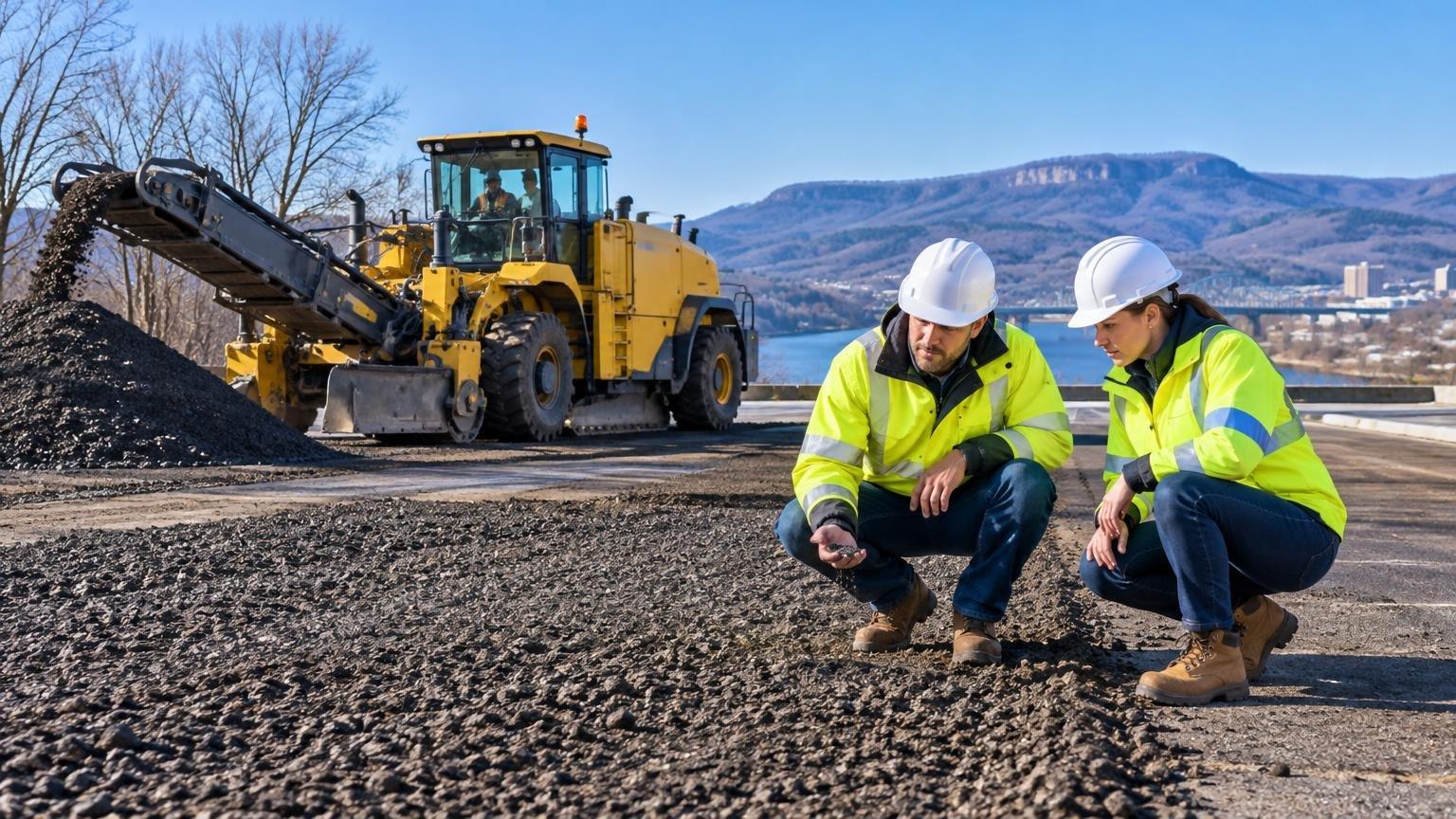
Asphalt pulverization starts with taking old, damaged pavement and grinding it into smaller particles while mixing it with part of the base layer. That blended material can then be treated and compacted to form a tougher new foundation.
- The broken pavement is crushed into reusable material
- That material gets blended into the top layer of soil
- A new base is packed down and prepared for fresh surface layers
This method saves time and makes better use of the existing structure. Instead of pulling out everything and hauling in new materials, we use what is already there, making it stronger and more stable. A rebuilt base like that holds up much better under cold weather and truck traffic. It flexes less, drains better, and prevents cracks from coming back as quickly.
Terra-Firma Stabilization & Reclamation uses high-capacity pulverizer machinery and customized soil stabilization agents, like cement or lime, to rehabilitate failing pavements across Chattanooga. Our approach blends existing base materials and subgrade soils for thorough winter-proofing and better long-term drainage.
Where Soil Stabilization Comes In
Some lots and roadways carry more weight or sit in places where water gathers easily. This includes sloped surfaces, low-lying areas, and any space with frequent traffic from delivery vehicles or machinery. These places are often where structural trouble hides beneath the pavement, and that is where soil stabilization makes a difference.
By strengthening the soil under the surface using additives or bonding agents, we are able to stop the base from shifting or sinking over time. That gives a thicker surface more strength and durability as temperatures drop, making it part of the site's long-term structure instead of a short-term fix.
When we combine soil stabilization and asphalt pulverization on sites like these, repairs last longer. The surface can support repeated freeze-thaw cycles without letting moisture tear it apart from below. And because the ground itself is more compact, drainage problems are much less likely to return.
Signs Your Lot Might Not Make It Through the Season
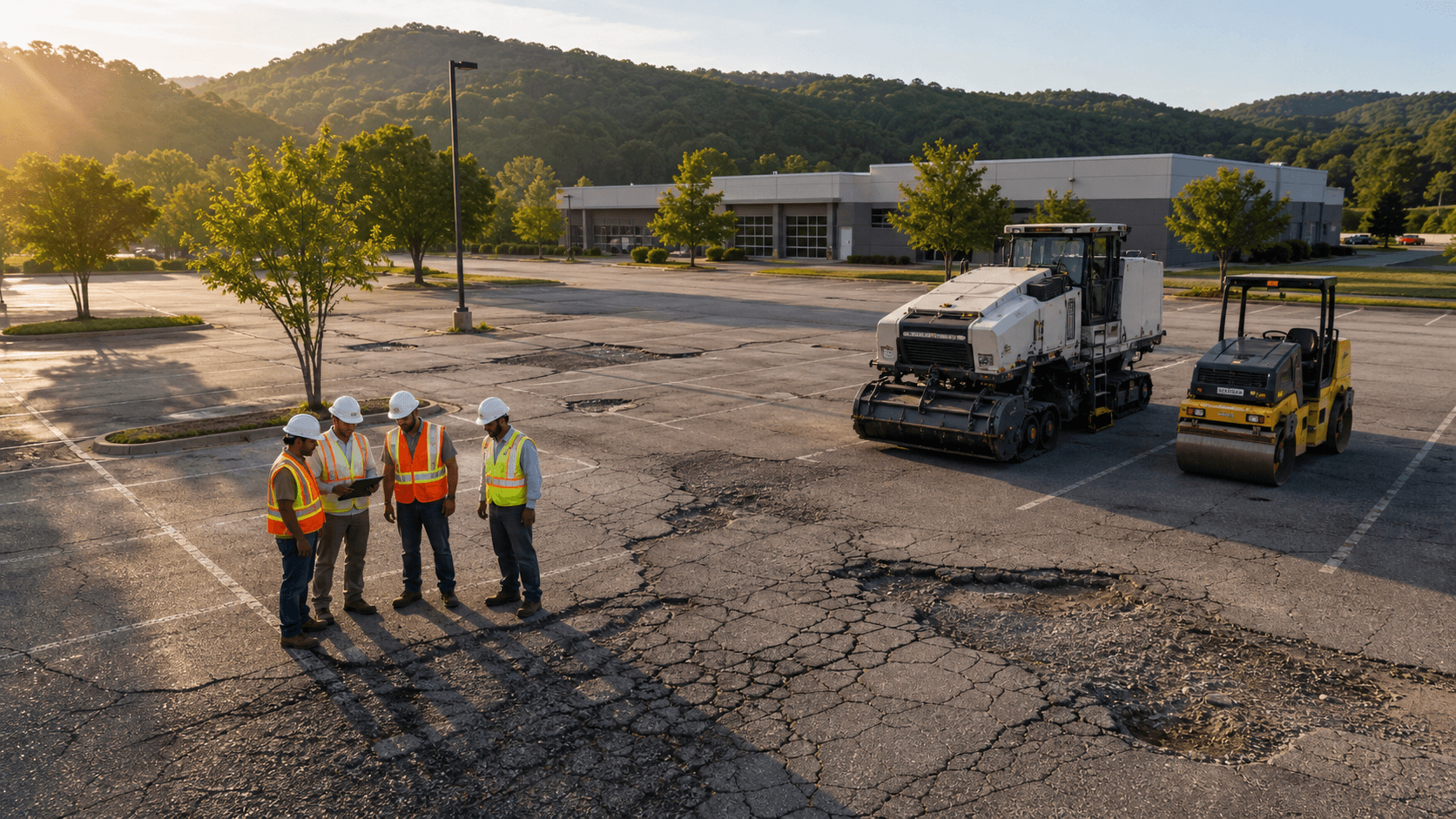
Some surface problems might look easy to patch, but small signs often point to larger trouble underneath. By the time January arrives, a few minor issues can quickly turn into something harder to ignore.
- Cracks that keep widening or reopening after patches
- Sunken areas that collect water hours after it rains
- Pavement that feels soft or leaves tire impressions
Movement in the foundation shows up through the surface. A patch might stop a crack from spreading for a week or two, but if the base is failing, the new break will show up somewhere else. Once the ground starts to flex or allows water to sit too long, winter weather only speeds up the damage. That is why it helps to look beneath the surface while it is still possible to work with stable ground before freezing becomes more routine.
Stronger Ground Means Fewer Winter Surprises
When we think about winter in Chattanooga, preparing the surface gets most of the attention. But what many sites need more than a patch or overlay is a better foundation. Cold weather does not just freeze what is on top, it spreads cracks, moves the base layer, and turns pooled water into pressure points.
That is why combining asphalt pulverization with soil stabilization matters. Stronger ground supports a thicker, more stable surface. It drains better, holds shape, and resists weather-related breakdowns. Winter conditions will still hit hard, but with a stable base in place, surface damage will not be nearly as quick to appear. If a lot already looks like it is starting to shift or settle, rebuilding the foundation before the cold sets in can make all the difference through the season and after.
Pavement in Chattanooga, Tennessee, showing early signs of cracking or poor drainage needs attention before winter sets in. At Terra-Firma Stabilization & Reclamation, we use proven solutions like soil stabilization and asphalt pulverization to strengthen the ground beneath your surfaces for longer-lasting results. By improving the foundation with methods that work with what you already have, we help reduce future problems such as potholes, shifting, and water build-up. Contact us to schedule a site review and get ahead of the season.