As we near late October in Chattanooga, Tennessee, we've got cooler days and more rain showing up regularly. That shift in weather can speed up pavement problems, especially in lots that took a beating over the summer. Cracks get deeper, soft spots sag even more, and the surface doesn't feel as solid as it used to.
If you've noticed new or worsening trouble spots in your lot, it might be time to look below the surface before winter settles in. Pavement reclamation isn't just for fixing worn-out roads. It helps rebuild the layers that give a lot its strength. If we ignore the signs for too long, winter moisture can cause damage that's harder to undo.
What Pavement Reclamation Actually Does
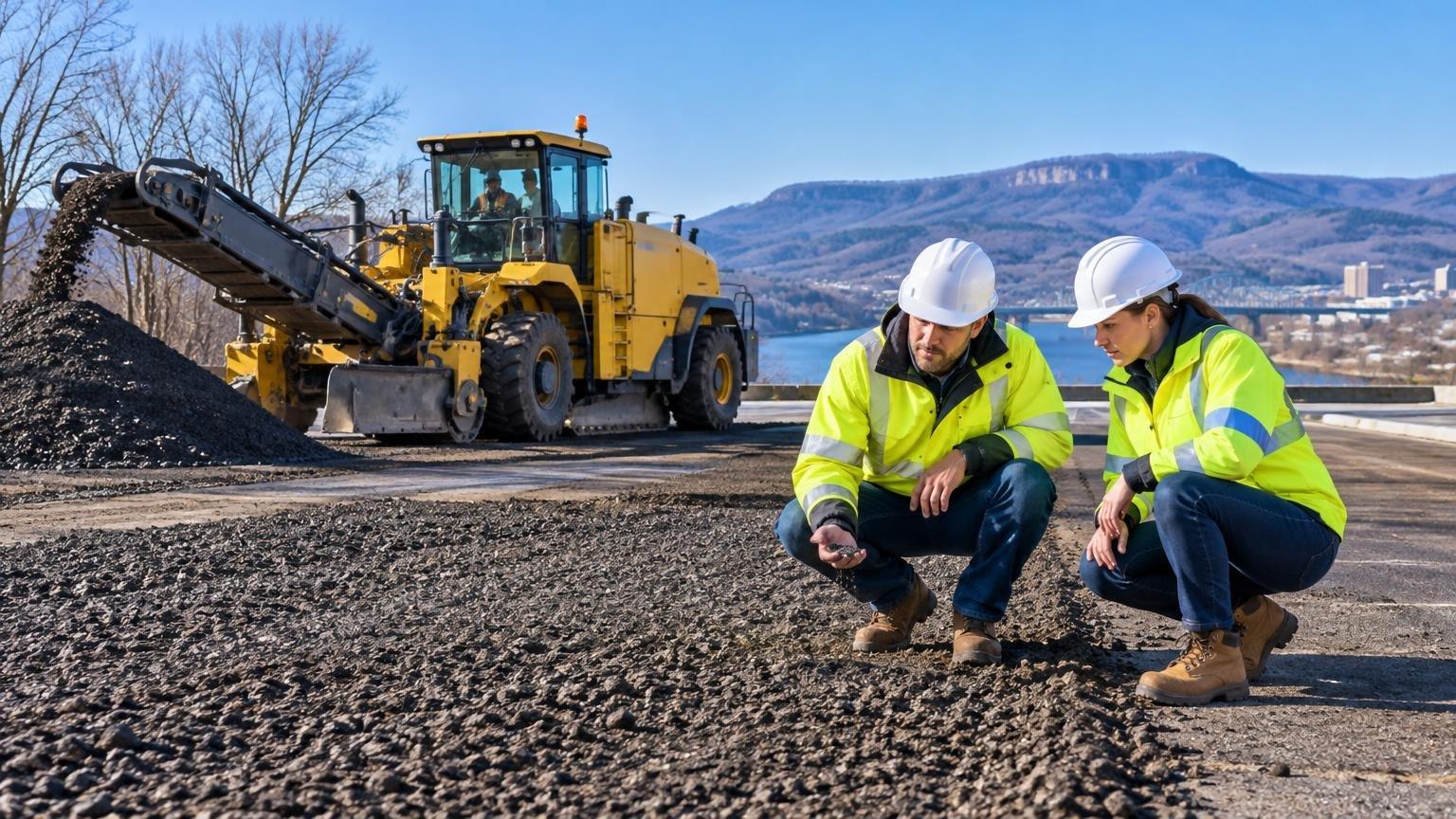
Surface patching can only go so far. When the cracks keep coming back or water keeps pooling, the deeper layers are usually the issue. Pavement reclamation works by recycling both the surface material and the foundation underneath. Instead of tearing everything out, we grind it down, mix it together, and rebuild the base so the new surface can hold up longer.
- The top pavement and base are crushed and blended into one layer
- Stabilizers are added to make that layer stronger and more compact
- A new surface is built on top of this solid foundation
That's a different approach from surface work, which only fixes what we can see. If your lot gets a lot of traffic or sits in a low place where water collects, those deeper layers matter more. A strong base helps the lot last through weather and wear like it's supposed to.
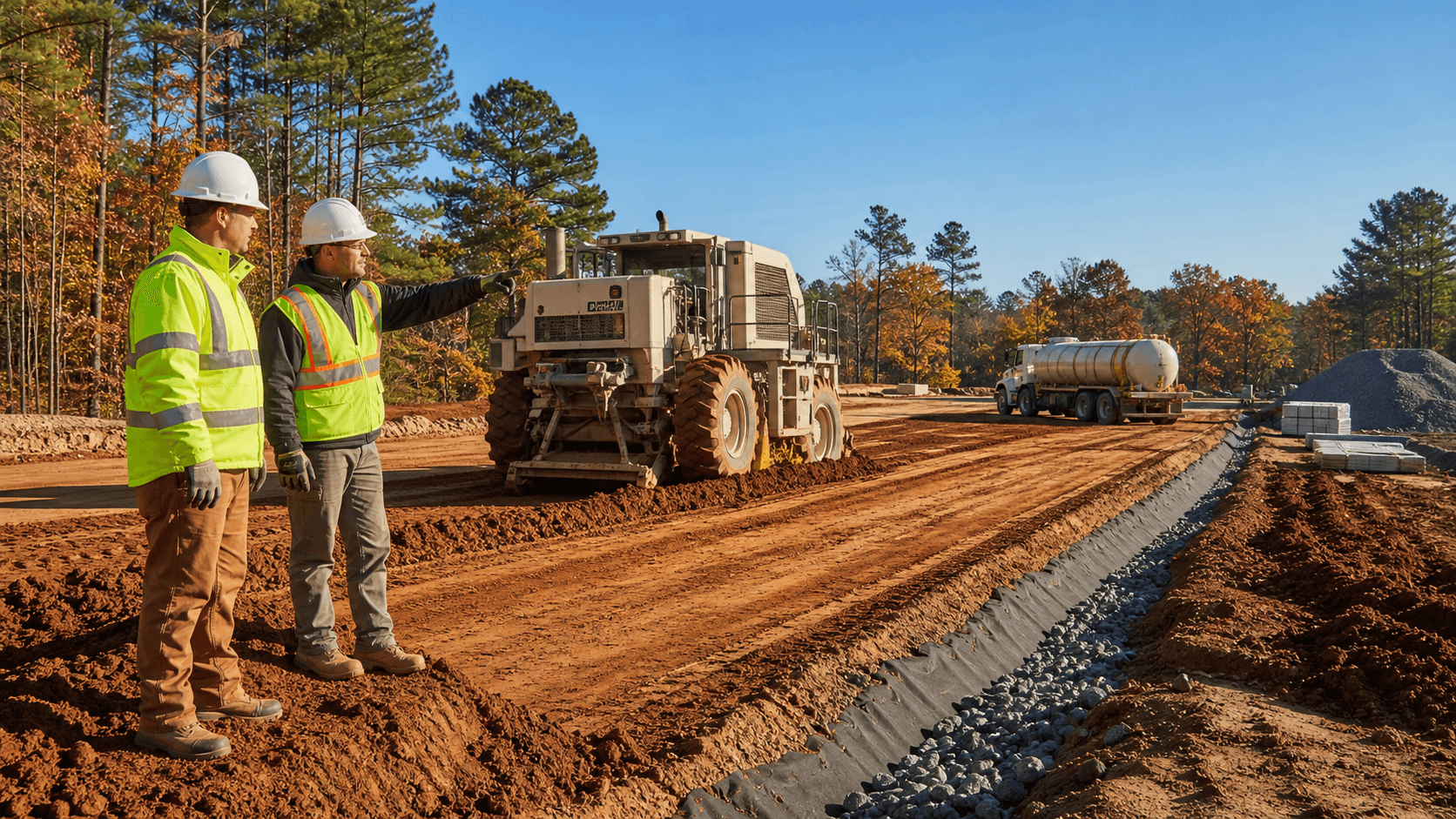
Terra-Firma Stabilization & Reclamation performs pavement reclamation and full depth stabilization projects throughout Chattanooga using high-powered milling and blending machines. Each job is engineered to the existing lot's soil, drainage, and traffic needs, delivering reliable base strength before the cold and wet seasons arrive.
Worsening Cracks and Potholes
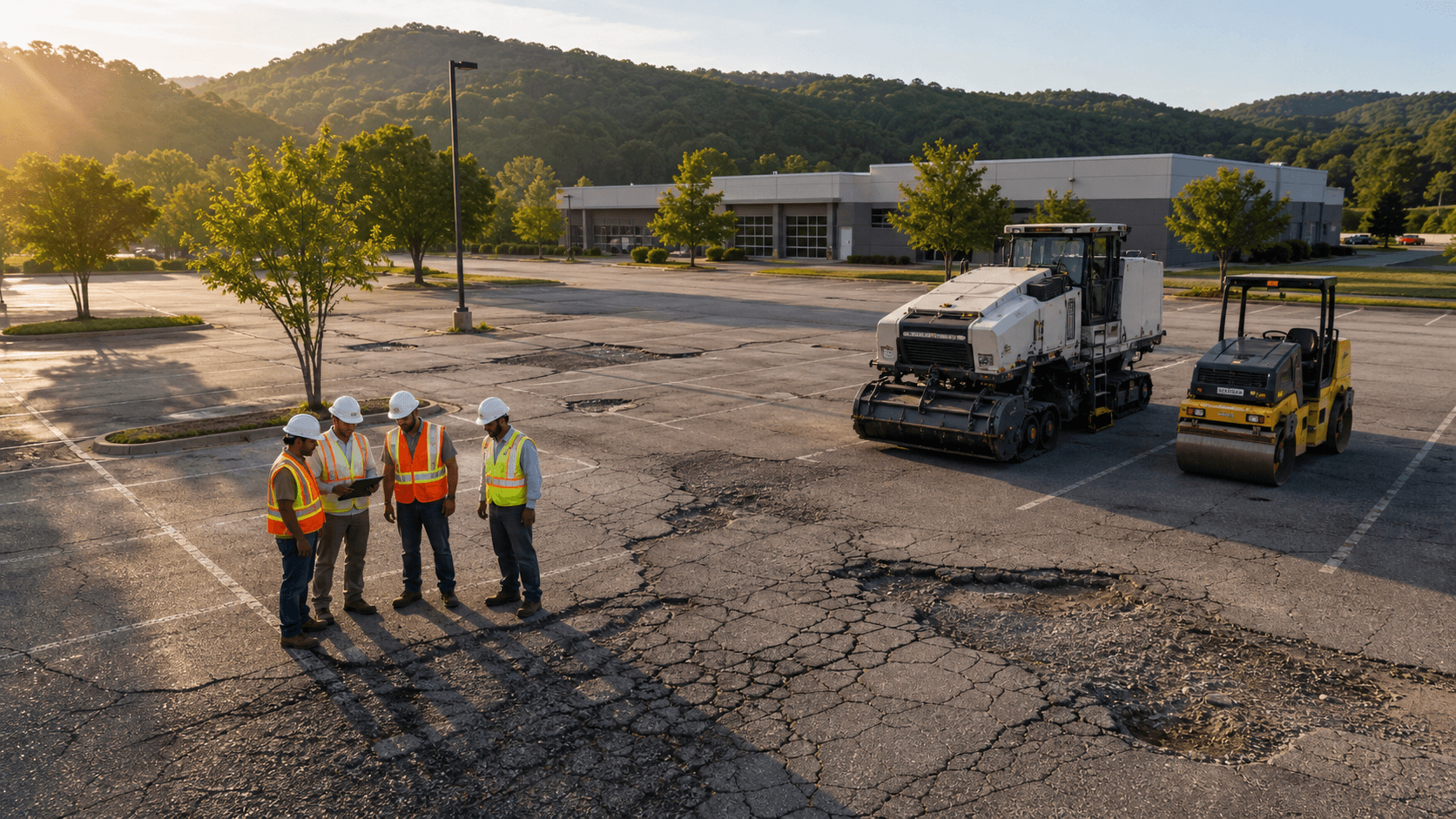
One of the clearest signs you might need pavement reclamation is when cracks and potholes keep coming back. If you're filling the same gaps every season, you're not alone. We see it a lot.
- Cracks keep spreading no matter how many times they get filled
- Potholes reform in the same places soon after repairs
- New cracks show up nearby after an old one is patched
That usually means the support underneath is wearing out. When the base shifts or weakens, the pressure from vehicles breaks the surface again and again. Quick fixes may help for a while, but they won't last if the real problem is lower down.
Uneven Surfaces and Drainage Trouble
After rain, you can learn a lot by walking your lot. Some areas stay wet longer than others, and that's not always because of poor drainage. Sinking pavement or strange slopes can signal trouble beneath the surface.
- Dips appear where the ground has settled unevenly
- Water pools in spots that used to drain well
- Sidewalks or parking areas near entrances hold water or get slick
Those issues show more in the fall as the ground softens and cools. What you might see as a simple drainage problem could be a sign the base layer isn't holding its shape. That leads to more movement and more surface trouble later on.
Surface Feels Soft or Flexes Under Pressure
A good parking lot should feel solid under your feet and tires. If it doesn't, that's a bad sign. You might feel it during daily foot traffic or when moving heavy equipment across the area.
- Tires leave marks or dents in hard surfaces
- Pavement flexes or gives slightly when walked or driven on
- Sections feel bouncy or hollow compared to others
These shifts mean the ground doesn't have enough strength to carry the load. It could be too wet underneath, or the base has started to come apart from repeated pressure. Either way, the surface won't last much longer if the structure isn't fixed.
Alligator Cracking and Spreading Damage
You've probably seen pavement that looks like a cracked eggshell or a sponge. That spiderweb cracking is sometimes called alligator cracking, and it usually means the surface layers are no longer supported from below.
- Cracks form tight, connected patterns that cover large sections
- Old repairs get surrounded by new damage within weeks
- Fixing one area causes cracks to spread nearby
When that starts happening, it's not enough to fill the lines or apply a small patch. The problem is that pressure is being spread across a weak base, and that sudden loss of support leads to wide, fast damage. Pavement reclamation helps rebuild that strength from underneath so the damage doesn't keep spreading.
Strong Ground Makes Safer Lots
Cold months bring more than just weather changes. They bring heavier risks, too. Wet pavement turns slick, and cracks become tripping hazards when they freeze. When a lot is already weak, those risks double.
Surface patches can hide problems for a little while, but they won't stop movement or drainage issues from getting worse. If the signs point to trouble below the top layer, it's not just about looks anymore. It's about safety.
Lots with strong foundations stand up better through rain, cold, and heavy traffic. Rebuilding the base where needed gives the whole surface a better chance to stay put and perform the way it should. Now is a smart time to look closely and act before those colder, wetter months do more damage.
When your lot in Chattanooga, Tennessee, starts showing signs of deeper damage, taking action now can prevent more costly issues as rain and freeze-thaw cycles set in. We don't just resurface, we rebuild the structure from the base up to make your lot safer and stronger for years to come. Our process for pavement reclamation ensures a solid foundation, so future cracks and soft spots are less likely to return. At Terra-Firma Stabilization & Reclamation, we're committed to delivering results that last, season after season. Reach out to schedule a site review before winter closes your window.