Access roads across job sites, farms, and remote properties in Huntsville can have a hard time holding up during summer. When storms roll through, these roads often turn soft, break apart, and lose shape. One heavy rainfall is sometimes enough to wash out section after section, leaving behind deep ruts and bare soil. The washed-out path slows the work down, pulls vehicles off track, and eats up time repairing damage that keeps coming back.
Soil stabilization can help keep this from happening in the first place. Instead of patching surfaces again and again, we look at strengthening the ground below the road. This gives it structure and staying power, even when water flows across it or heavy loads drive through. In a place like Huntsville, where wet soil and summer storms are part of the routine, this extra support can go a long way.
Why Washed-Out Access Roads Keep Coming Back
Loose or mixed soil is one of the biggest reasons washouts keep returning. Areas in and around Huntsville often have red clay, silty sand, and fill dirt pulled in from other sites. None of those hold together well after rain. Once that top layer softens, flowing water and vehicle movement sweep it downhill or push it off to the sides.
Poor drainage only adds to the problem. When water pools or rises from ditches, it weakens the base faster. Roads built without proper slope or structure lose their hold quicker, especially if the same repair is being applied over and over again without addressing the underlying cause. Each time a patch job is put down and you're back a week later fixing the same stretch, it means the problem likely runs deeper than what's visible on the surface.
Repeated repairs can waste more than just time. They usually spread the wear to nearby ground, making the area wider, softer, and harder to fix with each round. Without a better foundation, most gravel or surface treatments won't last when the weather keeps hitting hard.
What Soil Stabilization Actually Does for the Ground
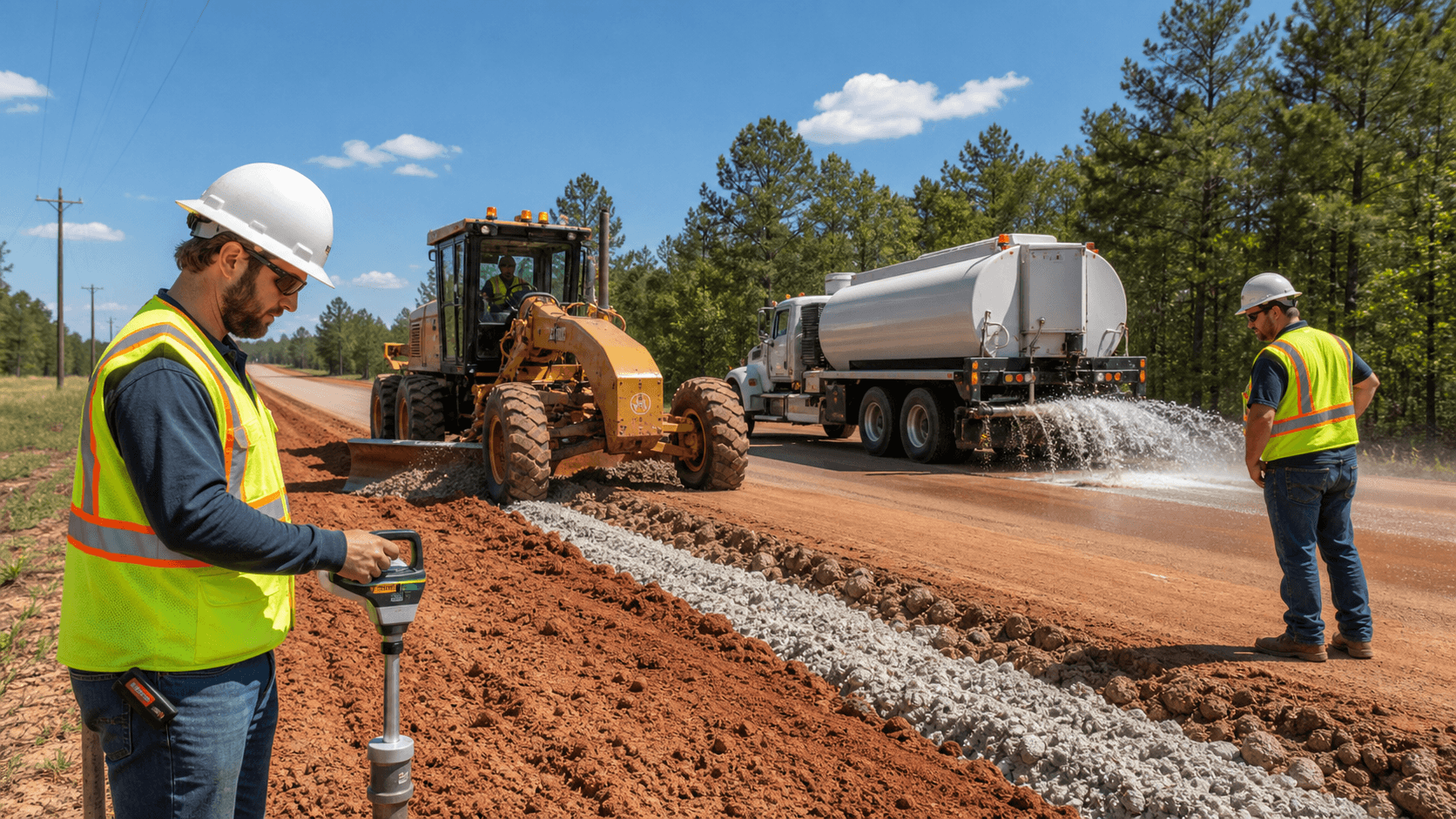
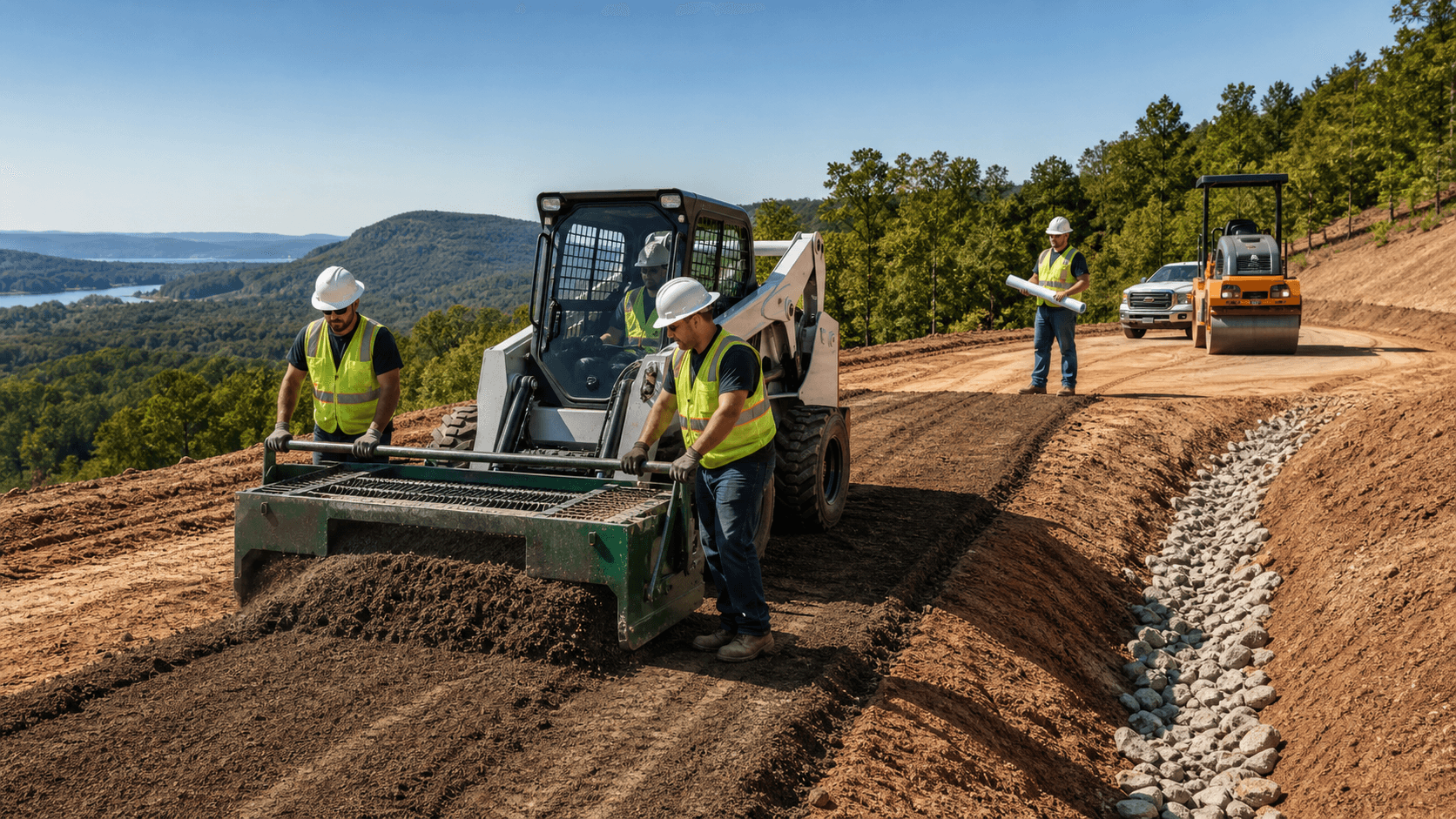
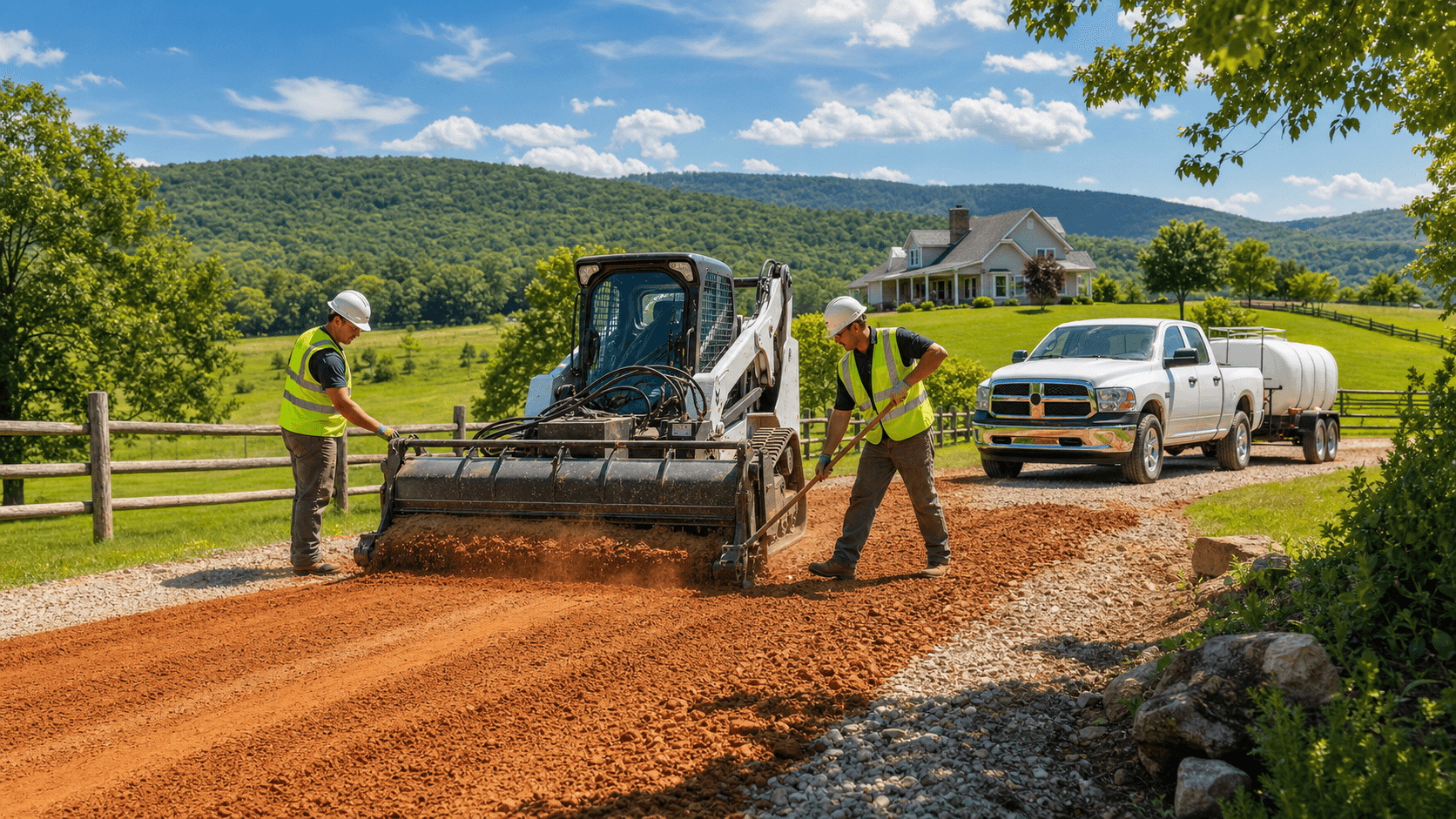
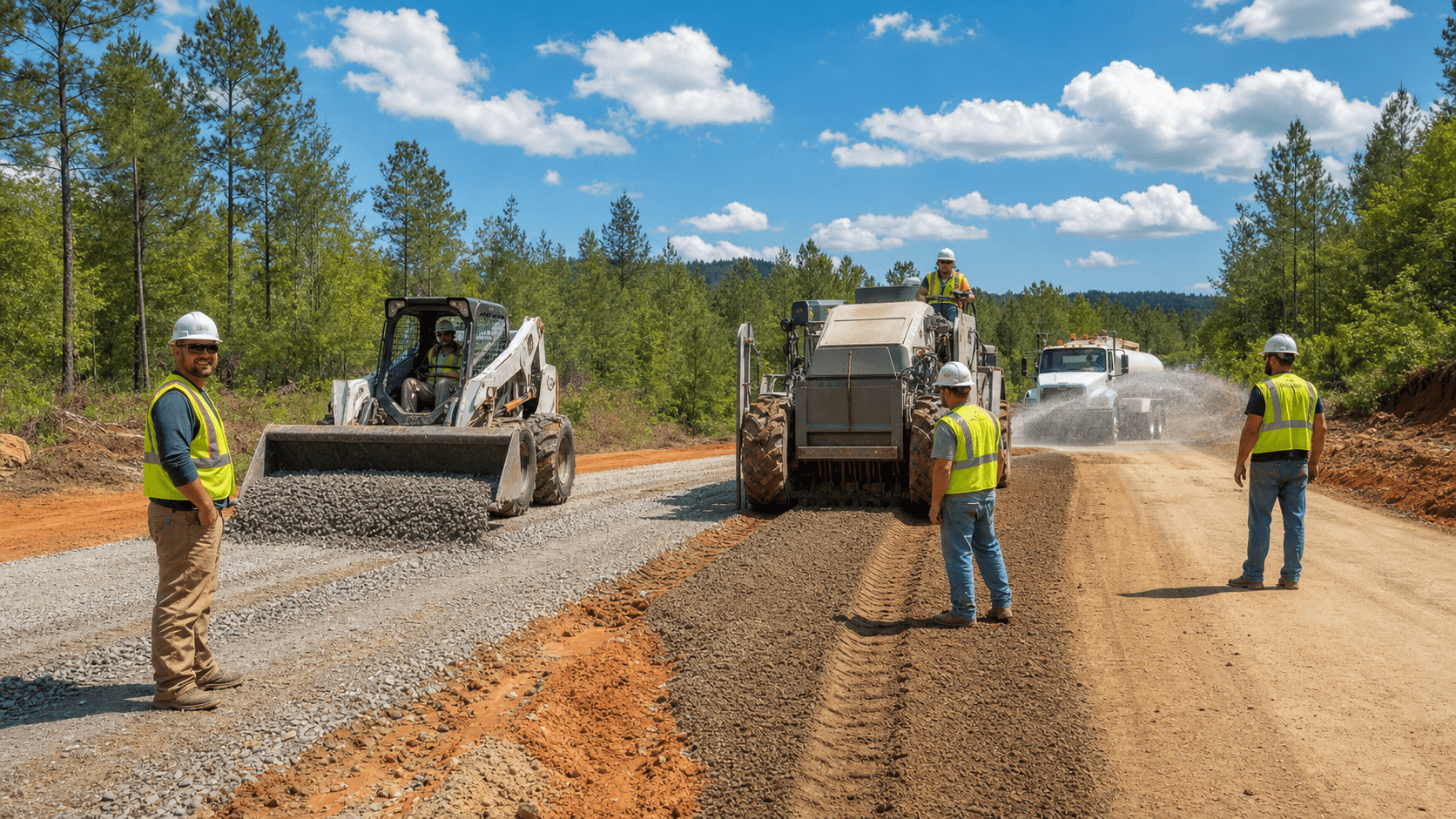
Soil stabilization changes the way the ground holds up under pressure. By adding stabilizing materials and blending them into the soil, the ground becomes stronger, more compact, and less prone to shifting or breaking apart. This isn't a surface-level fix. It's a way to bind the soil in place so it doesn't give out after every rain or tire pass.
Here's what that looks like once it's done:
- Rainwater no longer washes off the road surface quite as quickly
- Tires don't dig into the ground as deeply, even when the road is wet
- The road stays smoother across more seasons and doesn't need constant repair
Instead of relying on fresh gravel or digging out soft spots again and again, stabilization builds lasting strength underneath. That stronger sub-layer helps reduce how much the surface shifts, which keeps the road from developing dips, ridges, or soft shoulders.
In Huntsville, where soil types can be unpredictable and storms can arrive with force, soil stabilization gives the road a better chance to stay functional through different weather and site conditions.
Terra-Firma Stabilization & Reclamation uses site-specific testing and application rates to address common soil problems beneath Huntsville access roads. Our process may include lime or cement stabilization to handle both the high clay content and rapid moisture swings common in North Alabama, resulting in durable, low-maintenance access for business and agricultural users.
Signs an Access Road Needs More Than a Patch Job
Sometimes it looks like just a bad weather week, but the signs of deeper problems are easy to spot if we know what to look for. If an access road keeps giving out in the same places or has reached the point where the edges are beginning to break down, it's time to think beyond surface gravel.
Watch for these signals:
- Deep ruts that return even after grading
- Water collecting in the same spots every time it rains
- Edges of the road crumbling or shifting outward
- Soft spots that don't dry out even in hot weather
Late summer in Huntsville usually brings scattered storms and sudden downpours. If problem areas worsen during this time, the ground underneath likely isn't strong enough to support the current use. Often, we'll see roads that were solid in spring start separating or settling more between August and early fall.
A lot of these signs start small. But when repairs stop lasting more than a few days or weeks, it means the top layer isn't the issue. At that point, rebuilding the strength below becomes the more practical option.
Planning the Right Timing for Road Work in Huntsville
When it comes to stabilizing the ground, timing matters. Heat and dry air help, which is why summer is one of the better seasons to plan repair work that goes deeper than gravel spreading. Mid to late July is usually dry enough in Huntsville to give the soil time to bond with stabilizing treatments before fall rain picks up again.
Here's why that window is useful:
- Soil holds shape better when water levels are low
- Rain is more scattered, giving the ground time to cure after work
- Cooler fall temperatures haven't arrived yet, so moisture doesn't hang on as long
Waiting until fall or winter to try and harden the base makes everything more unpredictable. It's harder to keep materials dry, and site access can get muddy just from short rainfalls. But tackling the problem while the ground is still dry gives the site time to settle, which saves crews from pausing work due to water or tricky access conditions later on.
By looking at local weather patterns ahead of time, we can prepare sites for what's coming and avoid getting caught in a season where the road breaks down faster than we can fix it.
A Strong Fix That Stays Put
Washed-out access roads don't just slow down job sites. They cause long-term damage and stretch crews thin trying to keep up with emergency fixes. When these roads start breaking down after every rain, it tells us the soil under the surface isn't standing up to the load. Strengthening that soil changes how the road behaves, making it more dependable from week to week and season to season.
Soil stabilization lets us work with the ground, not against it. Instead of building the same road multiple times in a year, we put strength into the base so it holds together longer. When a road is going to carry weight and take weather all season, starting with stronger ground gives it the best chance to stand up without falling apart.
When constant ground instability keeps setting back your access roads in Huntsville, AL, our team at Terra-Firma Stabilization & Reclamation offers long-term solutions that address the base, not just surface wear. We focus on strengthening the underlying structure, minimizing repeated breakdowns after every storm. Discover how our approach to soil stabilization can improve the reliability of your roadways through wet seasons and heavy use, contact us to get started.